
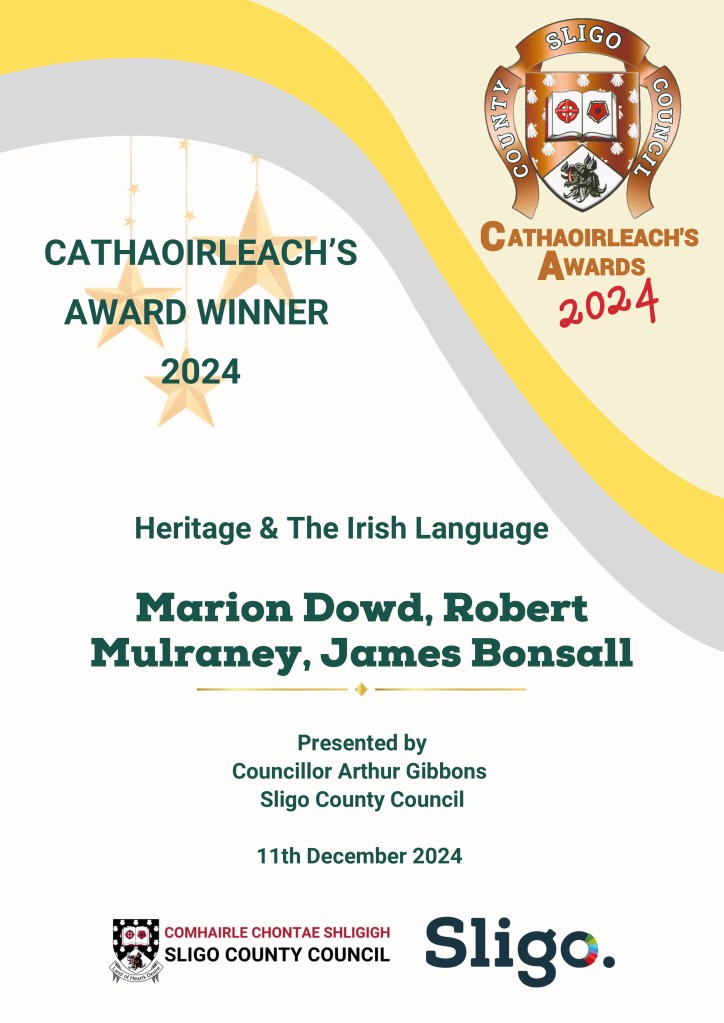
We are delighted to announce that the research team behind An Irish Civil War Dugout: Tormore Cave, County Sligo. Archaeology, History, Memory – Dr. Marion Dowd, Robert Mulraney, and Dr. James Bonsall – have won the Sligo County Council Cathaoirleach’s Award for ‘Heritage and the Irish Language’. The Cathaoirleach Awards honour individuals or groups who have made a special contribution to their community.
The award is a testament to the groundbreaking nature of the research, which presents the first archaeological excavation of a Civil War site in Ireland. The book, funded by ATU Sligo and the National Monuments Service, sheds light on the vital role of dugouts in guerrilla warfare during Ireland’s revolutionary period. The 420-page volume, published in hardback by Archaeopress and available as an open-access PDF, provides fresh insights into Tormore Cave, where over 30 anti-Treaty IRA men sought refuge in 1922 during the Irish Civil War.
Novel Ground in Cave Archaeology and Revolutionary History
An Irish Civil War Dugout covers uncharted territory in Irish history and cave exploration. By combining archaeology, military history, community memory, and landscape studies, the authors have created a highly detailed examination of a little-known aspect of guerrilla warfare. Tormore Cave, high in the mountains of County Sligo, provided a hidden sanctuary for IRA fighters during one of the most tumultuous periods in Irish history. Unlike most Civil War sites, Tormore Cave was never mentioned in official records, but its significance was preserved in local memory.
The excavation revealed nearly 200 artefacts, from pottery and glass to personal items and built structures, offering a rare glimpse into the daily lives of the men who hid in the cave. These artefacts, alongside local histories, paint a vivid portrait of hardship, resilience, and survival during a brutal conflict. The book goes beyond standard historical and archaeological narratives to tell a compelling story that appeals to both specialists and the general public.
Researchers have ‘given dignity and meaning to countless families‘
The Cathaoirleach Awards committee were ‘hugely impressed’ with the research teams ‘enormous contribution’ to the Sligo community. ‘Dr. Marion Dowd, Dr. James Bonsall and Robert Mulraney have been working on researching the Tormore cave for several years. They have brought to life the stories of the people of the civil war era in Sligo. They’ve given dignity and meaning to countless families who played their part in significant events of 101 years ago’.

Their book, An Irish Civil War Dugout, provides a detailed examination of geology, landscape, and human experience makes it an engaging read, while the interdisciplinary approach ensures that the book contributes to both cave archaeology and the broader understanding of Ireland’s past. At its heart are oral histories and folklore passed from the Revolutionary men and women of the Sligo community down to their families and the wider community. This book recalls their family stories and acknowledges the contributions made by the story keepers. This is not just the story of a cave but a testament to archaeological research, deep community involvement, and the connections forged with the descendants of those who played vital roles in historic events that shaped the nation’s dramatic beginnings.
Presentation at Cathaoirleach’s Awards 2024
The award was presented by Councillor Arthur Gibbons on Wednesday 11th December 2024 at the Cathaoirleach Awards Ceremony in the Council Chamber at Sligo County Hall. This is the second award for the research team, who also won the prestigious 2024 Literary Award at the annual SUICRO symposium, hosted by the Speleological Union of Ireland (SUI) and the Irish Cave Rescue Organisation (ICRO), for outstanding contributions to cave exploration and archaeology.

Book Details:
Dowd, M., Mulraney, R. & Bonsall, J. 2024. An Irish Civil War Dugout: Tormore Cave, County Sligo. Archaeology, History, Memory. 420 pages. Archaeopress. Printed ISBN 9781803277691. Digital ISBN 9781803277707. (Purchase a hard copy from Archaeopress)
Exploring Ireland’s Civil War through Archaeology
Tormore Cave, high in the mountains of County Sligo, served as a hidden sanctuary for anti-Treaty IRA fighters during one of the most tumultuous periods in Irish history. Combining archaeological excavations with local histories, this book delves into the Civil War dugout’s strategic role, uncovering its forgotten story a century later.
Historical Context
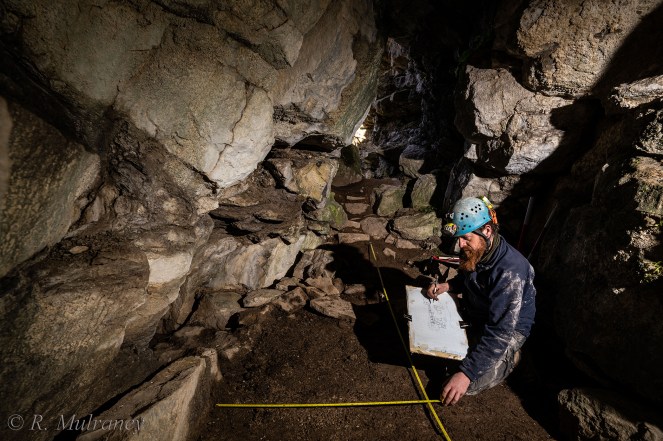
In September 1922, following a fierce firefight at Rahelly House in Sligo, more than 30 Republican fighters escaped into the mountains and took refuge in Tormore Cave. Unlike most Civil War dugouts, this site was never mentioned in official records. Yet, local memory preserved its significance, and on the centenary of the cave’s occupation, an archaeological excavation revealed the extensive modifications that transformed the natural cave into a habitable military hideout.
The excavation uncovered nearly 200 artefacts, including pottery, glass, personal items, and built structures that offer a window into the hardships endured by the men. Artefacts left behind provide a vivid portrait of daily life in the cave, while the stories of the men and women who supported them emerge from the shadows of history.
A Multidisciplinary Approach
This study, the first of its kind in an Irish context, facilitates a broader discussion on the role of dugouts in guerrilla warfare and highlights the lives of those who sought refuge in Tormore Cave. The book also features in-depth studies of key figures such as IRA General Officer Commanding Billy Pilkington, whose fascinating story has been largely overlooked in previous histories.
Contents Include
- Foreword by the National Monuments Service Chief Archaeologist Michael MacDonagh
- Archaeology of the cave, guerrilla warfare in Sligo, and historical context
- Artefacts and structures left behind in Tormore Cave
- Detailed appendices covering archaeological findings, geomorphology, pottery, bones, radiocarbon dates, and more
The People & Memory section of An Irish Civil War Dugout: Tormore Cave, County Sligo departs from the standard archaeological and historical narratives and brings to life the personal stories and struggles of those involved in and affected by the Civil War. Chapter 8 provides the most detailed biography of General Officer Commanding Billy Pilkington, a key yet often overlooked figure of the Irish Civil War. Pilkington’s leadership and resilience were pivotal during this turbulent period, as he skillfully balanced his role as commanding officer with a deep sense of responsibility for his men. He navigated the complexities of the conflict, striving to protect his comrades while avoiding the unnecessary loss of Irish lives – on both sides of the Civil War – whenever possible. After the war, true to a vow he made while in hiding at Tormore Cave, Pilkington became a Redemptorist Priest, dedicating his life to service and faith, further highlighting his remarkable character and commitment to others. Chapter 9 shifts focus to the IRA men billeted in Tormore Cave, exploring their day-to-day existence in the harsh conditions of the hideout. Chapter 10, sheds light on the crucial yet overlooked role of contributions of women as part of the IRA support infrastructure, as evidenced by civilian women, members of Cumann na mBan, and local Protestant families who vital to the success of the men in hiding. These women risked their lives to ensure the fighters were fed, cared for, and supplied with critical information and resources, underscoring their indispensable role in the conflict. Chapter 11 examines the aftermath and legacies of this turbulent time, considering the lasting impact on the individuals, families, and communities involved in this historical moment.
About the Authors
Dr. Marion Dowd is a Lecturer of Archaeology at Atlantic Technological University Sligo. Her research focuses on Irish cave archaeology, from prehistory through recent times, and explores the relationship between folklore and archaeology.
Robert Mulraney is an archaeologist, ecologist, and speleologist with expertise in cave exploration and mapping. He focuses on the historical narratives and folklore surrounding caves and liminal spaces.
Dr. James Bonsall is a specialist in geophysical surveys and remote sensing. He is the director of Fourth Dimension Prospection Ltd. and applies his expertise to research conflict archaeology and the application of geophysical techniques in Ireland.

An Irish Civil War Dugout: A Unique Contribution to Irish Revolutionary History
This book offers a detailed local perspective on the Irish Civil War while contributing to a wider understanding of Ireland’s revolutionary period. The authors’ multidisciplinary approach allows readers to engage with a previously hidden aspect of Irish history, uncovering how dugouts shaped guerrilla tactics and providing a fresh look at the legacy of the Civil War.
Purchase Information
An Irish Civil War Dugout: Tormore Cave, County Sligo is available for purchase in print or free as an open-access PDF from Archaeopress, here. Funding for the project has been generously provided by ATU Sligo and the National Monuments Service.

 Dr James Bonsall